


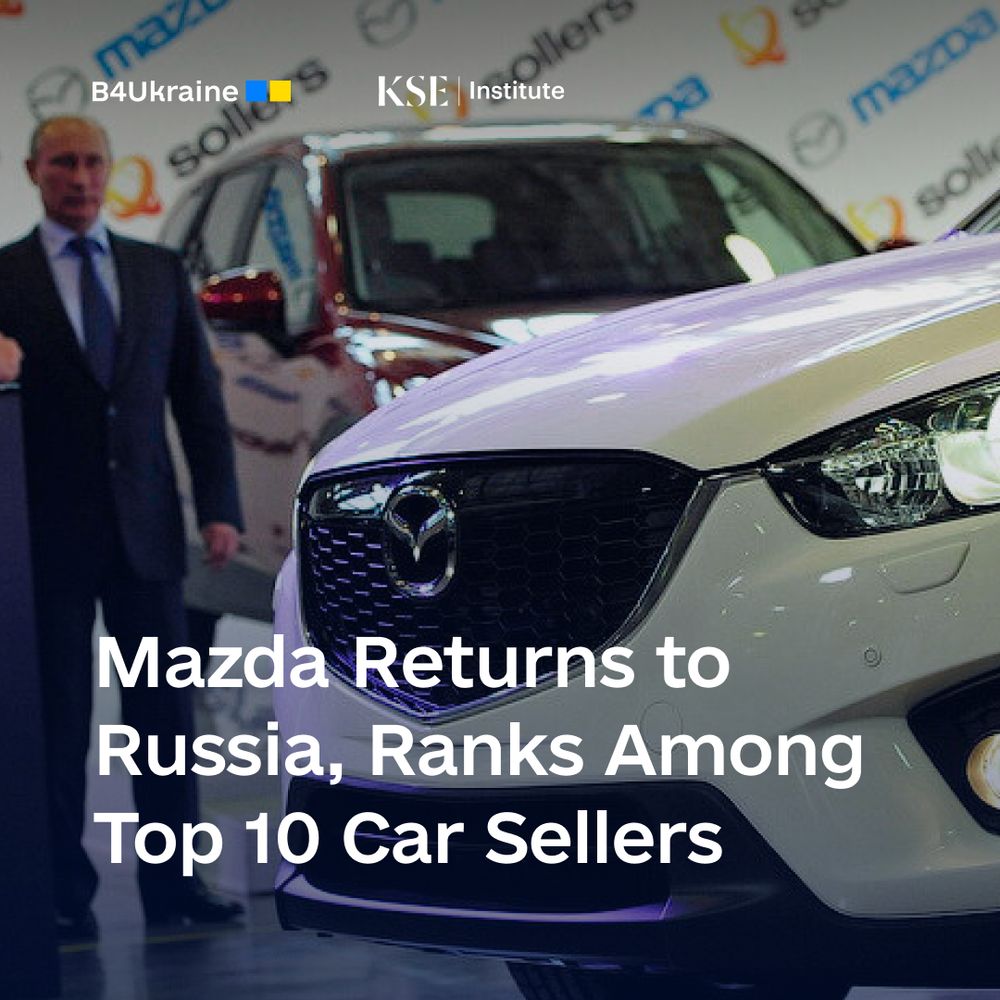


Mazda vehicles have reentered the Russian market, despite the company’s previous formal suspension of operations in Russia. KSE Institute and B4Ukraine — a global coalition of more than 100 civil society organisations — are urging Mazda Motor Corporation to immediately suspend and cease all commercial activities in the Russian Federation and to take concrete steps toward a complete and responsible exit from the Russian market. We are calling on the Japanese government to incentivize and reward responsible exits, while introducing deterrents — including financial penalties, restrictions on contracts, and exclusion from public procurement — for firms that continue doing business in Russia.
Following the full-scale invasion of Ukraine, Mazda has suspended operations in Russia and divested from the Russian joint venture, selling its stake in the Vladivostok plant “due to the situation in Ukraine that arose in February 2022.”
However, recently, Mazda Motor Corp’s Russian unit, which is wholly owned by the Japanese carmaker, has openly introduced two crossover models — the CX-5 and CX-50 — to the Russian market. The vehicles are reportedly sourced from a plant in China and are sold with warranties.
Russian media report that more than 2,000 new Mazda vehicles have been registered in Russia since the beginning of 2026, marking the first time the Japanese brand has entered the country’s top ten best-selling car brands. Vehicles from another Japanese carmaker, Toyota Motor Corporation, are also being sold in Russia through entities linked to the parent company.
Mazda’s Russian unit reported revenue of 1.6 billion roubles (approximately $21 million) in 2024, according to the entity’s official financial statements.
Mazda declined to respond to B4Ukraine’s inquiry, intensifying concerns about the company’s potential continued contribution to Russia’s war economy. This refusal raises concerns about Mazda’s lack of transparency and accountability regarding its Russia-related operations, as stipulated under the UN Guiding Principles on Business and Human Rights, which encourage public reporting, disclosure of relevant risk assessments, and meaningful engagement with affected stakeholders and civil society organisations.
Nezir Sinani, Executive Director of B4Ukraine, said:
“As Moscow continues to bomb children in Ukraine, some Japanese carmakers are finding creative ways to make millions in Russia, even if it means fueling Russia’s military budget and war economy. This is unacceptable and must stop immediately. The Japanese government must take stronger action to ensure that Japanese companies end business with a country that is not only destroying the Ukrainian people and international order but also threatening Japan’s own security.”
Andrii Onopriienko, Deputy Director for Development at Kyiv School of Economics and Head of the LeaveRussia Project, said:
“While Japan is providing financial support to Ukraine, some Japanese companies, including Mazda, demonstrate an unwillingness to uphold the democratic values of Japanese society. By continuing business operations in the aggressor state, they are in effect supporting Russia’s war economy, which fuels large-scale, well-documented war crimes.”
B4Ukraine and KSE Institute urge the Japanese government and its economic agencies to use all available powers to halt support for trade and investment with Russia, including denying public funds to companies that continue operating there, and to set clear, enforceable standards for corporate conduct grounded in human rights and economic security.