


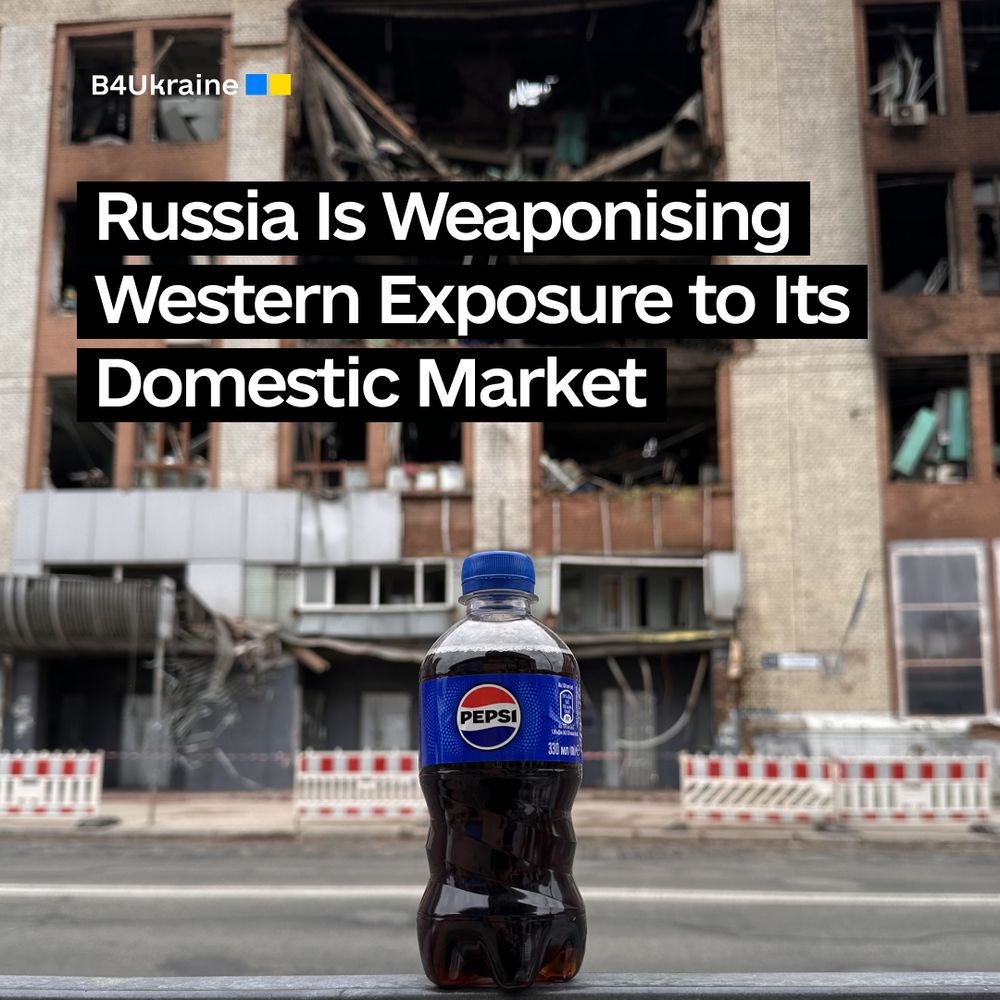


As Europe stands at a historic crossroads and moves closer to unlocking €210 billion in loans for Ukraine using frozen Russian central bank assets, it’s crucial to recognise that the Kremlin is once again using intimidation as a strategy. By threatening to nationalize foreign companies, Moscow aims to weaken the EU’s political will to act.
The tactic is not new. Moscow has repeatedly used asset seizures as a political tool. According to the KSE Institute, foreign-owned assets left in Russia total $127 billion, while more than $57 billion of foreign companies’ assets have already been seized by Russian authorities and transferred to local firms or state entities since 2022. This perfectly illustrates the reality of investing in Russia’s rogue state that flouts the rule of law.
B4Ukraine has consistently warned companies that remaining in Russia is not a strategic business decision — it is a liability. Now, the companies who chose to ignore the warnings and stay put are facing nationalization and the collapse of legal protections. Their short-term profits have turned into long-term exposure to financial, legal, and reputational damage.
But the consequences extend beyond the balance sheets. The continued presence of Western companies in Russia is now obstructing Ukrainian access to funds by enabling the Kremlin’s blackmail. Moscow has made it clear — formally and informally — that Western companies’ safety in Russia hinges on Western restraint over its frozen assets. These signals encourage companies to lobby their governments against using Russian assets or redirecting them for the benefit of Ukraine. In doing so, they serve the Kremlin’s interests and not their own countries’.
By staying in Russia, these firms are effectively holding both Ukraine and Western governments hostage to their private interests. This forces governments to shoulder the financial burden of defending Ukraine, while those same companies continue to profit in Russia and indirectly bankroll the war.
The cost of military assistance and Ukraine’s reconstruction must fall on the aggressor state and the companies sustaining its war machine — not on Ukrainian and Western taxpayers.
Corporate leaders should stop asking “how not to provoke Moscow,” but instead focus on how to exit the market responsibly and swiftly. Rather than sit and wait for nationalization, the least risky option is to write off their losses and seek recourse through international arbitration.
For their part, Western governments must confront the role their businesses continue to play in Russia and establish clear standards for corporate conduct that uphold both human rights and economic security. Governments can do this by issuing principle-based, non-prescriptive guidance and requiring robust due diligence from companies operating in Russia — setting out clear expectations and processes without dictating specific actions. In this way, governments do not assume responsibility for companies’ overseas behavior but rather fulfill their own international obligations to protect human rights. They should also incentivize and support swift, responsible exits from the Russian market while promoting ethical reinvestment in Ukraine and other stable, secure markets.