


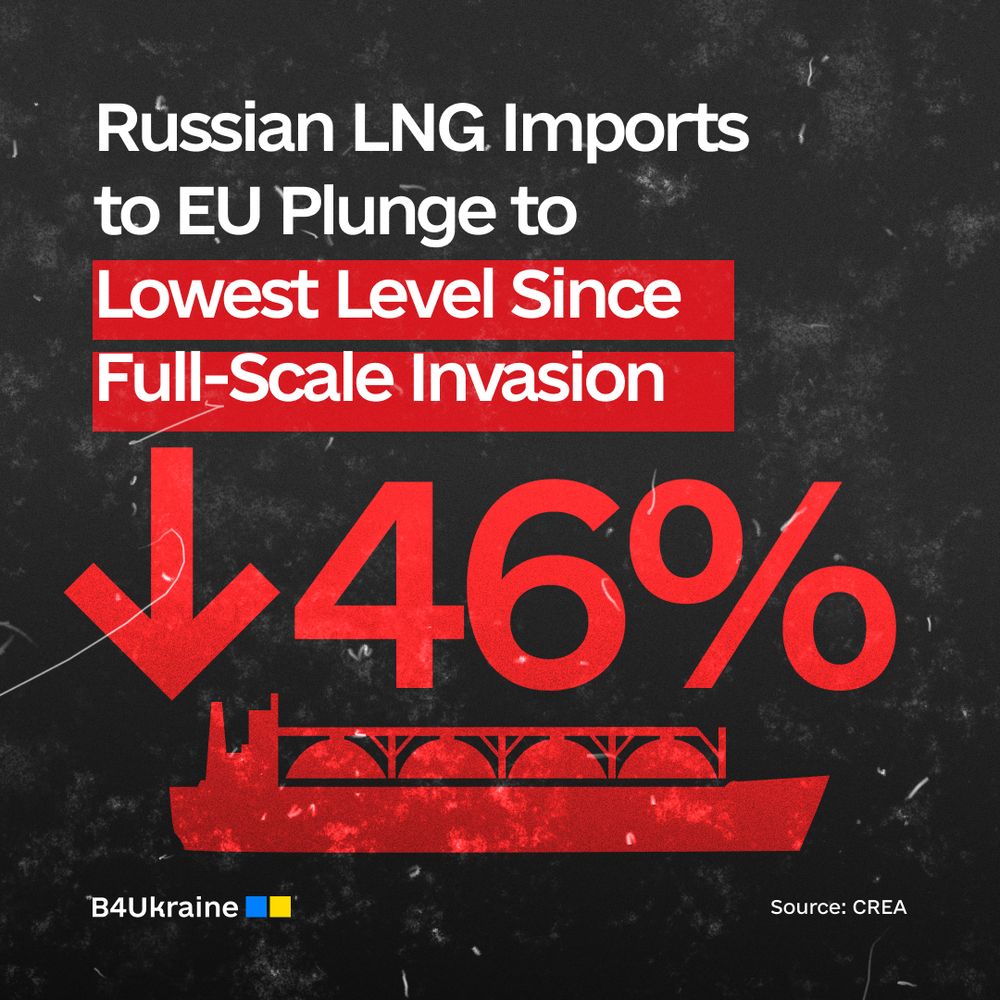


Russian liquefied natural gas (LNG) imports into the European Union fell 46% month-on-month to their lowest level since Russia’s full-scale invasion of Ukraine, according to analysis by the Centre for Research on Energy and Clean Air (CREA).
French ports accounted for 57% of the EU’s Russian LNG imports during the month.
The decline came four months after an EU ban on short-term Russian LNG supply contracts took effect on April 25.
The ban does not cover all Russian LNG imports. Under the EU’s REPowerEU regulation, imports remain allowed if the underlying short-term contracts were signed before June 17, 2025.
That means Russian LNG can still enter the EU under so-called legacy contracts, making enforcement and transparency important to ensure the exemption does not undermine the bloc’s phase-out of Russian gas.
“As winter approaches, sanctioning countries must resist pressure to weaken the EU’s phase-out of Russian LNG, including long-term contracts. Despite Russia’s monthly export earnings, robust sanctions remain essential to cutting the revenues that finance its war,” said CREA analyst Isaac Levi.
The EU remains the largest buyer of Russian LNG, accounting for almost half (49%) of Russia’s total LNG exports, followed by China (24%), Japan (18%), and South Korea (6%).
Read the full monthly analysis of Russian fossil fuel exports and sanctions