


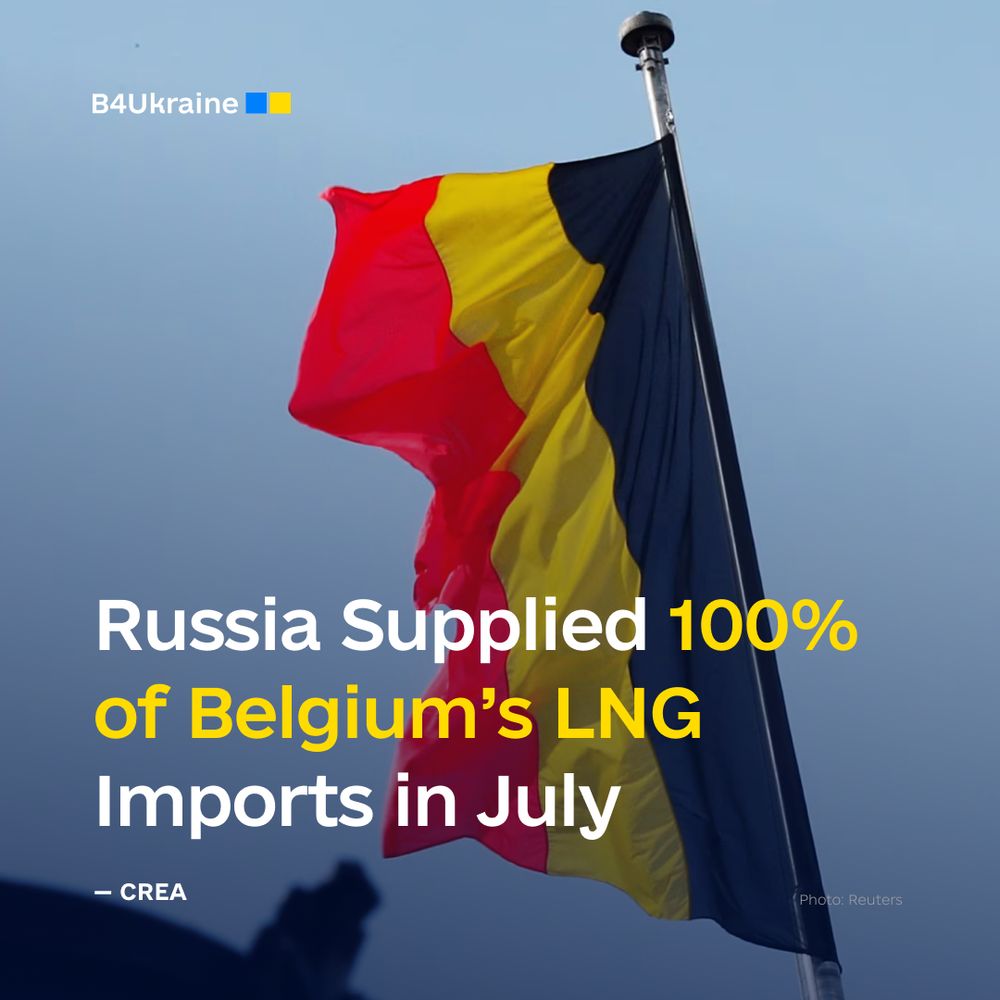


In July 2026 alone, the five largest EU buyers of Russian fossil fuels paid Russia a combined €1.3 billion, according to new data from the Centre for Research on Energy and Clean Air (CREA).
Among them are Ukraine’s key allies, including France and Belgium. Belgium sourced 100% of its LNG imports from Russia in July.
Hungary was the EU’s largest buyer, importing €486 million worth of Russian fossil fuels. Slovakia ranked second (€299 million), followed by Belgium and France.
It is deeply shameful that, in the fifth year of Russia’s full-scale invasion, Moscow continues to terrorise Ukrainians while EU countries keep sending billions of euros to Russia for fossil fuels.
Russia’s fossil fuel revenues fall as Ukraine disrupts oil exports
Russia’s fossil fuel export revenues fell 12% month-on-month in July, dropping to €683 million per day, even as export volumes remained broadly flat.
Russian oil product loadings fell to their lowest level on record, with volumes dropping 23% to 4.7 million tonnes — less than half the level recorded in July 2025.
Ukraine’s drone strikes continued to disrupt Russian oil exports. Tuapse loaded almost no oil products for a second consecutive month, while loadings at Novorossiysk fell 23% month-on-month following strikes on 19 July.
Meanwhile, India’s imports of Russian crude reached a record high for the second consecutive month, rising to €5.5 billion.
EU loopholes continue to undermine sanctions
Despite the EU’s ban on oil products made from Russian crude, 18 shipments from refineries processing Russian oil unloaded at EU ports in July — more than double June’s total.
CREA’s analysis also exposes a major carve-out in the EU’s 21st sanctions package that, in practice, appears to benefit Greece-based Dynagas.
Dynagas operates five specialist Arc7 ice-class carriers serving Russia’s Yamal LNG project. In 2025, the company transported 96% of Russian LNG carried by EU operators to third countries.
The exemption could allow Dynagas to redirect up to 7.4 million tonnes of Russian LNG to third countries after the EU’s import ban takes effect in January 2027. That is roughly four times the volume of Russian LNG carried by EU operators to third countries in 2025.
The carve-out risks allowing EU carriers to continue profiting from Russian LNG while giving Moscow more time to develop alternative shipping capacity and weaken one of Europe’s strongest points of leverage.
The EU must allow this exemption to expire, rather than turning it into a permanent loophole. Meanwhile, the UK must hold firm on its planned maritime services ban and avoid creating an EU-style exemption tailored to one company and large enough to keep Russia’s LNG trade moving.