




EU imports of Russian LNG increased by 4% month-on-month in May 2026, despite the ban on short-term contract purchases taking effect on 25 April 2026, according to the Centre for Research on Energy and Clean Air (CREA).
The increase was driven largely by Spain doubling its monthly imports from Russia, underscoring the importance of strict enforcement and transparency to prevent the phase-out from being undermined by continued purchases under legacy contracts.
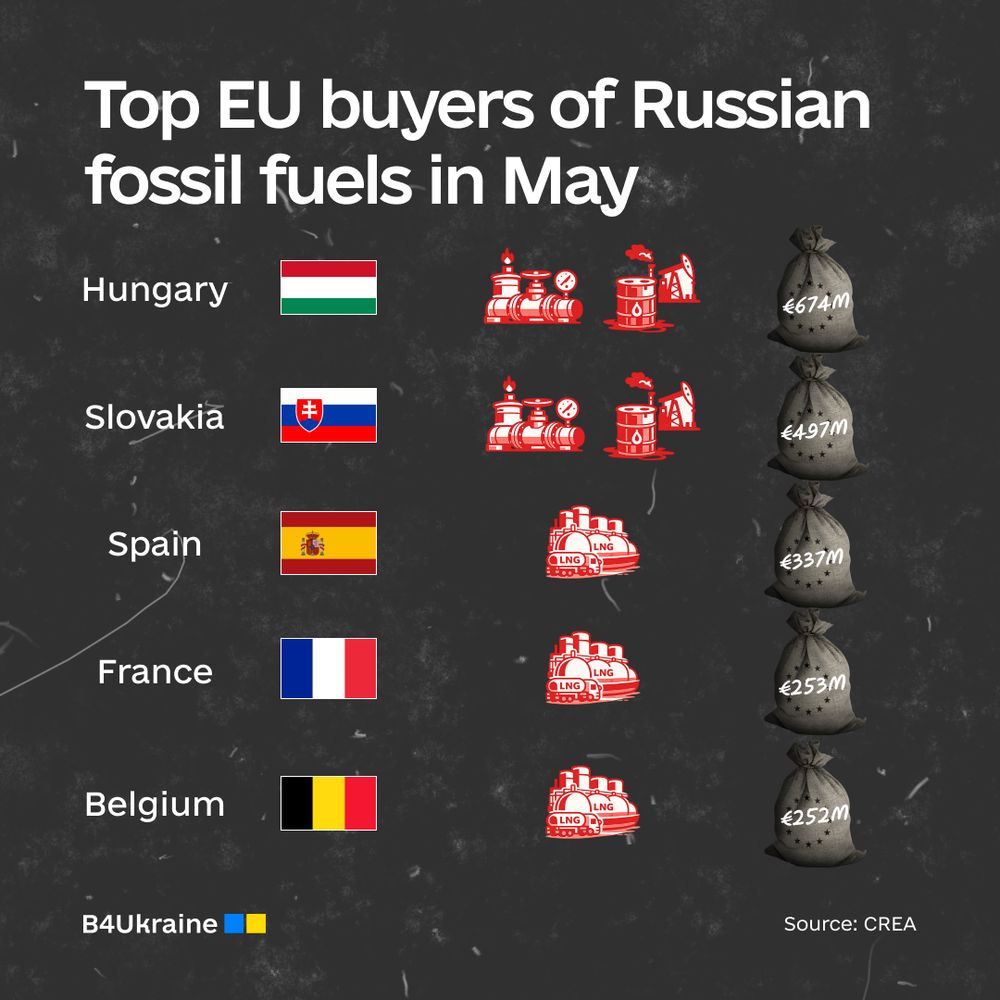
In May 2026, the five largest EU importers of Russian fossil fuels paid Russia a combined €2 billion, including €842 million for LNG, €485 million for pipeline gas, and €687 million for crude oil delivered via the Druzhba pipeline.
Hungary and Slovakia together imported €485 million worth of Russian pipeline gas through the Balkan Stream pipeline.
Hungary remained the EU’s largest buyer of Russian fossil fuels, importing €674 million worth in May. Its purchases consisted entirely of pipeline gas and crude oil.
Slovakia was the second-largest importer, purchasing €497 million worth of Russian fossil fuels. This included €121 million in pipeline gas and €376 million in crude oil delivered through the Druzhba pipeline.
Spain ranked third, importing €337 million worth of Russian fossil fuels, all of it LNG. Despite the EU ban on short-term Russian LNG contracts taking effect on 25 April, Spain’s imports of Russian LNG doubled month-on-month in May, while its total LNG imports increased by only 14%.
France was the EU’s fourth-largest importer, purchasing €253 million worth of Russian LNG. French imports of Russian LNG fell by 29% month-on-month in May, broadly in line with a 23% decline in the country’s overall LNG unloadings.
Belgium ranked fifth, importing €252 million worth of Russian LNG. Belgian imports of Russian LNG decreased by 25% month-on-month, while the country’s total LNG unloadings fell by an even steeper 31%.
EU Faces New Signs of Breaches of Ban on Fuels Made from Russian Crude
Despite the EU ban on imports of oil products made from Russian crude, which entered into force on 21 January 2026, ten shipments of oil products identified as high risk under EU guidance were unloaded at EU ports in May. These shipments originated from refineries known to process Russian crude.
Six of the shipments departed from refineries in Türkiye, while three originated from Georgia.
Cyprus was the largest recipient, unloading three shipments from refineries processing Russian crude. Spain received two such shipments, while Bulgaria, Croatia, France, Ireland, and Italy each received one.
The arrival of these cargoes underscores the need for robust enforcement of the EU ban. National authorities should investigate imports of oil products from refineries that process Russian crude to ensure that Russian-origin oil does not continue entering the EU through third-country refining routes, in breach of the bloc’s sanctions regime.